
Onboarding a Vietnamese Engineering Team: 2026 Guide
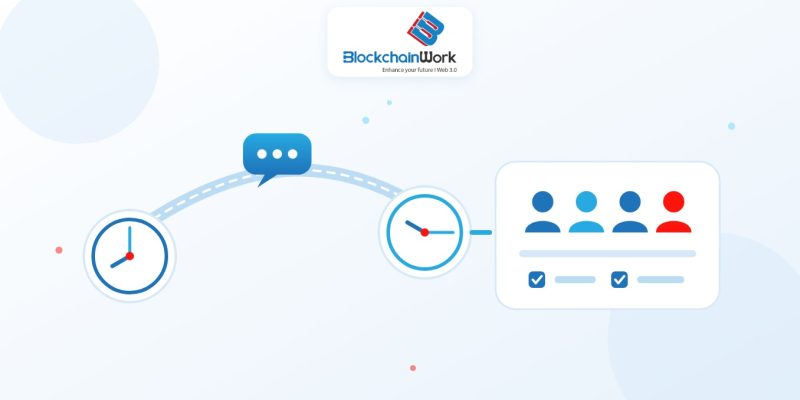
Answer first: onboarding a Vietnamese engineering team works best when you plan around three facts. Vietnam runs on UTC+7 all year with no daylight saving time (IANA tz database, 2026), so overlap is easy with Tokyo or Singapore and thin with Europe or the US. Vietnamese labour law sets a probation period of up to 60 days for roles that require a college degree or higher, paid at no less than 85% of the job’s wage (Labor Code 45/2019/QH14). And Vietnam scores 70 on power distance and 30 on individualism in the Hofstede model (The Culture Factor Group, 2026), so it helps to invite questions and feedback explicitly.
This guide covers what employers in Japan, Singapore, Europe and the US should prepare before day one, how to set up communication, and a practical 90-day plan. Every figure comes with its source and year.
Table of contents
- 1 Why are more companies building engineering teams in Vietnam?
- 2 How much working-hour overlap can you expect with a Vietnamese team?
- 3 Which Vietnamese labour rules shape the first 90 days?
- 4 How do Vietnamese engineers prefer to communicate?
- 5 What does a practical 90-day onboarding plan look like?
- 6 How should onboarding work in the AI era?
- 7 How do you keep a Vietnamese engineering team after onboarding?
- 8 Frequently asked questions
Why are more companies building engineering teams in Vietnam?
Answer first: Vietnam combines a large IT workforce with strong expansion intent from foreign firms already operating there. The challenge has shifted from finding a market to recruiting and keeping people.
| Indicator | Value | Source (date) |
|---|---|---|
| IT enterprises in Vietnam | 74,000, employing over 1.2 million workers | Ministry of Science and Technology, via VnEconomy (05/2025) |
| ICT graduate target | About 100,000 graduates per year in 2030-2035 | Decision No. 1002/QD-TTg, via VnEconomy (05/2025) |
| Japanese firms in Vietnam planning to expand in the next 1-2 years | 56.9% (n=905), vs 46.8% across ASEAN | JETRO FY2025 overseas business survey (11/2025) |
| Japanese firms in Vietnam saying recruitment is becoming difficult | 48.2% (n=894) | JETRO FY2025 overseas business survey (11/2025) |
Sources: VnEconomy, Vietnam’s IT sector faces 200,000 personnel shortage (2025); VnEconomy, Vietnam targets to have 100,000 ICT graduates annually in 2030-2035 period (2025); JETRO, FY2025 Survey on Business Conditions of Japanese Companies Operating Overseas (Asia and Oceania) (2025).
In blockchain specifically, backend skills are the most in-demand. Backend Developer (18.75%) and Full-stack Developer (17.08%) were the most frequently recruited technical roles in 2025, according to the BlockchainWork Vietnam Blockchain Job Market Report 2025 (BlockchainWork, 2026). If you are still at the hiring stage, our 2026 employer guide to hiring blockchain developers in Vietnam covers sourcing and role design. If you have not yet decided whether to set up an entity, use a vendor or hire through an Employer of Record, start with Build, Rent or Hire a Blockchain Team in Vietnam (2026). The latest demand data is in our Vietnam Blockchain Talent Report 2026: Q3 2026 listings rose 22.2% from Q2, and listings mentioning AI, machine learning or data engineering doubled as a share of the total.
How much working-hour overlap can you expect with a Vietnamese team?
Answer first: Vietnam uses Indochina Time (UTC+7) all year round and does not observe daylight saving time (IANA tz database, 2026; Wikipedia, 2026). That gives a full working day of overlap with Singapore, most of a day with Tokyo, and only a few hours with Europe.
| Partner city | Time difference to Vietnam | Overlap in a 09:00-18:00 day (Vietnam time) | Source (date) |
|---|---|---|---|
| Singapore (UTC+8) | Vietnam is 1 hour behind | About 8 hours (09:00-17:00) | IANA tz database (2026); BlockchainWork calculation |
| Tokyo (UTC+9) | Vietnam is 2 hours behind | About 7 hours (09:00-16:00) | IANA tz database (2026); BlockchainWork calculation |
| Berlin (UTC+1, summer UTC+2) | Vietnam is 6 hours ahead (5 in summer) | About 3 hours in winter, 4 in summer | IANA tz database (2026); BlockchainWork calculation |
| London (UTC+0, summer UTC+1) | Vietnam is 7 hours ahead (6 in summer) | About 2 hours in winter, 3 in summer | IANA tz database (2026); BlockchainWork calculation |
| New York (UTC-5, summer UTC-4) | Vietnam is 12 hours ahead (11 in summer) | No overlap in standard hours | IANA tz database (2026); BlockchainWork calculation |
Sources: IANA tz database, asia file (2026); Wikipedia, Time in Vietnam (2026).
Practical setup by overlap:
- Tokyo and Singapore: run daily stand-ups in the morning Vietnam time and treat the team as fully synchronous.
- Europe: protect the 2-4 shared afternoon hours (Vietnam time) for reviews and decisions, and move status updates to written channels.
- US East Coast: agree on one rotating early-morning or evening call per week and rely on written handovers for everything else. Because Vietnam does not shift its clocks, the gap changes by one hour whenever the US or Europe switches to or from daylight saving time, so re-confirm meeting times twice a year.
Which Vietnamese labour rules shape the first 90 days?
Answer first: probation, working hours, leave and social insurance are set by law, so build your onboarding plan around them rather than importing your home-country template. The points below summarise the Labor Code and professional tax summaries.
| Rule | What the source says | Source (date) |
|---|---|---|
| Probation length | Up to 60 days for roles requiring a college degree or higher; up to 180 days for enterprise managers | Labor Code 45/2019/QH14, Art. 25 (2019, effective 2021) |
| Probation wage | Not lower than 85% of the wage for the job | Labor Code 45/2019/QH14, Art. 26 |
| Working hours | Up to 8 hours per day and 48 hours per week; the State encourages a 40-hour week | Labor Code 45/2019/QH14, Art. 105 |
| Annual leave | 12 working days for employees in normal conditions | Labor Code 45/2019/QH14, Art. 113 |
| Public holidays | 11 days under Art. 112, including 5 days for Lunar New Year; 24 November (Vietnam Culture Day) added as a new paid public holiday in 2026, for 12 statutory days in total | Labor Code Art. 112; Government of Vietnam portal (04/2026) |
| Employer social contributions | 21.5% of salary in total (social insurance 17.5%, health insurance 3%, unemployment insurance 1%); employee 10% in total (8%, 1%, 1%) | PwC Worldwide Tax Summaries (reviewed 09/2026) |
Sources: Labor Code No. 45/2019/QH14, English translation hosted by Apolat Legal (2019); Government of Vietnam, November 24 recognized as Viet Nam’s public holiday (2026); PwC, Vietnam – Individual – Other taxes (2026).
Two timing points matter for a team starting in late 2026:
- Lunar New Year 2027: the government-approved schedule runs from 4 to 10 February 2027 for civil servants and public employees, with businesses notified separately by the Ministry of Home Affairs (Vietnam News, 2026). Expect release plans and hiring to slow around these dates.
- Social insurance law: the amended Law on Social Insurance No. 41/2024/QH15 took effect on 1 July 2025 (KPMG Vietnam, 2024), so older onboarding checklists may reference outdated rules.
Map your 90-day plan to the 60-day probation window: the first two months should end with a clear, documented review against goals agreed on day one.
How do Vietnamese engineers prefer to communicate?
Answer first: expect a team that respects hierarchy and values group harmony, with stronger written English than spoken English. Design rituals that make it safe to ask questions and that put key decisions in writing.
| Indicator | Vietnam | Source (date) |
|---|---|---|
| Power distance (Hofstede model) | 70 | The Culture Factor Group (2026) |
| Individualism (Hofstede model) | 30, a collectivistic society | The Culture Factor Group (2026) |
| EF English Proficiency Index | Score 500, rank 64 (global average 488) | EF EPI 2025 (11/2025) |
| EF EPI score for the IT job function | 500 | EF EPI 2025 |
| EF EPI skill scores | Reading 522, Writing 508, Listening 470, Speaking 461 | EF EPI 2025 |
| City scores | Hanoi 532, Da Nang 509, Ho Chi Minh City 508 | EF EPI 2025 |
| Zalo monthly active users | 79.2 million (Q3 2025) | VNG, via Tuoi Tre News (12/2025) |
Sources: The Culture Factor Group, Country Comparison Tool: Vietnam (2026); EF Education First, EF EPI 2025: Vietnam (2025); Tuoi Tre News, Vietnam’s 80-million-user messaging giant Zalo puts spotlight on parent VNG’s business (2025).
What this means for daily work:
- Invite questions explicitly. The Culture Factor Group describes Vietnam as a society where “people accept a hierarchical order in which everyone has a place” (2026). Junior engineers may not challenge a lead’s estimate in a meeting. Ask each person for input by name, and run anonymous retro boards.
- Write it down. Reading (522) and writing (508) score higher than listening (470) and speaking (461) in EF EPI 2025. Send agendas before calls, summarise decisions in writing afterwards, and record demos.
- Give feedback privately and specifically. In a collectivistic culture (individualism score 30), public criticism can feel heavier than intended. Keep corrective feedback to one-on-ones and praise in team channels.
- Agree on channels early. VNG reported 79.2 million monthly active Zalo users in Q3 2025 (Tuoi Tre News, 2025), so many team members will already coordinate there informally. Decide on day one which tool is the official channel for work decisions, so nothing important lives only in a private chat.
What does a practical 90-day onboarding plan look like?
Answer first: split the first 90 days into access and context, first delivery, and ownership, with the probation review landing at day 60.
| Phase | Goals | Why it fits Vietnam | Source (date) |
|---|---|---|---|
| Days 1-14 | Accounts, repos, architecture walkthrough, a named buddy, written team agreements (channels, meeting times, code review rules) | Written norms support the stronger reading and writing skills | EF EPI 2025 |
| Days 15-60 | First production pull requests, paired reviews, weekly one-on-ones, mid-point check at day 30 | Probation for degree-level roles runs up to 60 days | Labor Code 45/2019/QH14, Art. 25 |
| Day 60 | Documented probation review against goals set on day one | Probation wage is at least 85%, so the end of probation is a meaningful milestone for the employee | Labor Code 45/2019/QH14, Art. 26 |
| Days 61-90 | Ownership of a component, on-call or release duties, career conversation | Japanese firms in Vietnam cite recruitment as getting harder, so early career conversations support retention | JETRO FY2025 survey (11/2025) |
Sources: see the Labor Code, EF EPI and JETRO links above.
For blockchain teams, add a security step to the first phase: walk new engineers through your smart contract review process and audit tooling before they merge their first contract change. Our overview of smart contract audit tools in 2026 is a good starting reading list.
How should onboarding work in the AI era?
Answer first: most new engineers will already use AI tools, so the onboarding question is not whether they use AI but which tools, with which data, and with what review. Write that down before day one, and use AI to shorten the time a new hire needs to understand your codebase.
The usage is already there. In BlockchainWork’s 2025 survey of Vietnam’s blockchain workforce, 53% of respondents used AI for research and 43% for writing and testing code (BlockchainWork, 2026). On the employer side, ManpowerGroup’s Q3 2026 Employment Outlook Survey of 265 employers in Vietnam found 83% willing to offer better pay and benefits to candidates who use AI tools effectively and responsibly (BlockchainWork, Vietnam Blockchain Talent Report 2026, 2026). If your policy is silent, new hires will fill the gap with their own habits and personal accounts.
Decide on company AI tools or personal accounts
| Option | When it fits | What to settle in writing |
|---|---|---|
| Company-managed AI accounts | Default for any team working on client code, private repositories or keys | Which tools are approved, who administers accounts, the vendor’s terms on data retention and model training |
| Internal assistant over your own documents | Teams with a large codebase, architecture records and runbooks | What sources it can read, who can access it, how answers are checked |
| Personal AI accounts | Only for public or non-confidential tasks, such as learning a language feature | An explicit list of what may never be pasted into a personal account |
Source: BlockchainWork recommendation (2026).
BlockchainWork’s view: give the team company accounts for the tools you approve. Allowing personal accounts for confidential work moves company data into contracts your company has not signed.
Set data rules that cover AI tools
Vietnam’s Law on Personal Data Protection No. 91/2025/QH15 took effect on 1 January 2026. Fines for cross-border transfer violations can reach 5% of the violator’s revenue in the preceding year, and the cap for other personal data violations is VND 3 billion (Tilleke & Gibbins, 2025). Pasting customer or employee personal data into an external AI service can be a transfer of that data, so the AI policy and the data protection policy should be the same document.
Never put these into an AI tool that the company has not approved:
- Private keys, seed phrases, deployer or admin keys, API keys and other credentials
- Customer, user or employee personal data
- Source code from private repositories, unreleased smart contracts and audit findings
- Client documents covered by a non-disclosure agreement
Use AI to shorten ramp-up, with human review
| Phase | AI-assisted task | Human check |
|---|---|---|
| Days 1-5 | Ask the approved assistant to explain the repository structure, build steps and architecture records | The buddy reviews the new hire’s one-page summary of the system |
| Days 6-14 | Generate questions about unclear modules; draft missing documentation | Documentation fixes go through normal review and become the first merged pull request |
| Days 15-60 | Use AI to draft tests and refactoring proposals | Every AI-assisted pull request is labelled and reviewed by a person; smart contract changes also go through your audit process |
| Days 61-90 | Add the new hire’s best prompts and checklists to a shared team library | The tech lead decides what becomes team standard |
Source: BlockchainWork recommendation (2026).
Add a one-hour AI and security session to week one: the approved tools, the data rules above, how to label AI-assisted work, and real examples of mistakes to avoid. Repeat it when tools or rules change.
Security rules and working methods to agree on day one
- Access: least-privilege access to repositories and environments, multi-factor authentication everywhere, and a named owner for every secret.
- Keys: deployer and treasury keys held in hardware wallets or multisig, never on a laptop or in a chat message.
- Code: secret scanning on every repository, and no AI-generated code merged without a human reviewer.
- Contracts: confidentiality and IP assignment written into the labour contract, including work done with AI tools.
- Offboarding: revoke accounts, keys and AI tool access on the last day.
- Working method: written-first communication, a pull request template with an “AI-assisted” checkbox, and decisions recorded where the whole team can find them.
How do you keep a Vietnamese engineering team after onboarding?
Answer first: plan for annual salary reviews, the Lunar New Year bonus cycle, and visible career growth. These are the levers foreign employers in Vietnam already use.
| Indicator | Value | Source (date) |
|---|---|---|
| Average base salary, blockchain technical roles with 3+ years of experience | Around 30 million VND per month | BlockchainWork Vietnam Blockchain Job Market Report 2025 (03/2026) |
| Base salary increase, Japanese firms in Vietnam | 5.5% year on year, all industries | JETRO FY2025 survey (11/2025) |
| Average Lunar New Year bonus | 8.69 million VND per employee, up 13% year on year, across more than 50,000 enterprises | Ministry of Home Affairs, via Bac Ninh newspaper (02/2026) |
| Average monthly wage, all workers | 9.76 million VND (376 USD) in 2025 | Ministry of Home Affairs, via Bac Ninh newspaper (02/2026) |
Sources: BlockchainWork, Vietnam Blockchain Job Market Report 2025 (2026); JETRO FY2025 survey (2025); Bac Ninh newspaper, Lunar New Year average bonus for workers up 13% (2026).
Bonuses are discretionary under Vietnamese law (Labor Code Art. 104), but the national Tet bonus figures show how widely employers pay them. Budget for the bonus before the holiday, and communicate the policy clearly in your offer letter. JETRO’s survey also lists reviewing salary levels and providing Japanese-language training among the retention measures firms use (JETRO, 2025). For why Japanese companies are expanding engineering teams in Vietnam in the first place, see Why Japanese Firms Hire Vietnamese Engineers (2026 Data).
Building or growing an engineering team in Vietnam? Register your company at blockchainwork.net/employer-signup to reach 25,000+ registered candidates across blockchain, Web3, AI and technology roles (employers who fully verify their account and regularly review candidate applications can post jobs free of charge), or email our team at contact@blockchainwork.net to discuss your hiring and onboarding plan.
Frequently asked questions
1. What timezone is Vietnam in?
Vietnam uses Indochina Time (UTC+7) all year and does not observe daylight saving time (IANA tz database, 2026). It is 1 hour behind Singapore and 2 hours behind Tokyo.
2. How long is probation for software engineers in Vietnam?
Up to 60 days for roles that require a college degree or higher, with pay of at least 85% of the job’s wage (Labor Code 45/2019/QH14, Articles 25 and 26).
3. How many public holidays does Vietnam have?
The Labor Code lists 11 days, including 5 days for Lunar New Year. In 2026, Vietnam added 24 November, Vietnam Culture Day, as a new paid public holiday (Government of Vietnam, 2026).
4. Is English a barrier when working with Vietnamese engineers?
Usually not for written work. Vietnam scored 500 on EF EPI 2025, above the global average of 488, with reading and writing stronger than speaking and listening. Written agendas and meeting summaries help close the gap.
5. Should new engineers be allowed to use AI tools during onboarding?
Yes, with written rules. Approve specific tools, provide company accounts, list the data that may never be pasted into an AI tool, and require a human review of every AI-assisted pull request. Vietnam’s Law on Personal Data Protection No. 91/2025/QH15, in force since 1 January 2026, makes the data rules a legal matter as well as a security one (Tilleke & Gibbins, 2025).
6. When is the Lunar New Year holiday in 2027?
The approved schedule for the public sector runs from 4 to 10 February 2027 (Vietnam News, 2026). Private companies usually align with it, so plan releases around those dates.
Sources
- BlockchainWork, Vietnam Blockchain Talent Report 2026: Q3 Job Market Trends (2026), including ManpowerGroup Employment Outlook Survey Q3 2026: https://insider.blockchainwork.net/en/vietnam-blockchain-talent-report-2026
- Tilleke & Gibbins, Vietnam’s New Personal Data Protection Law: A Closer Look (2025)
- IANA, tz database, asia file (2026)
- Wikipedia, Time in Vietnam (2026)
- National Assembly of Vietnam, Labor Code No. 45/2019/QH14, English translation hosted by Apolat Legal (2019)
- Government of Vietnam, November 24 recognized as Viet Nam’s public holiday (2026)
- Vietnam News, Holiday schedules for Vietnamese Culture Day, Lunar New Year, National Day approved (2026)
- PwC, Vietnam – Individual – Other taxes (2026)
- KPMG Vietnam, Amended Law on Social Insurance (2024)
- The Culture Factor Group, Country Comparison Tool: Vietnam (2026)
- EF Education First, EF EPI 2025: Vietnam (2025)
- Tuoi Tre News, Vietnam’s 80-million-user messaging giant Zalo puts spotlight on parent VNG’s business (2025)
- JETRO, FY2025 Survey on Business Conditions of Japanese Companies Operating Overseas (Asia and Oceania) (2025)
- VnEconomy, Vietnam’s IT sector faces 200,000 personnel shortage (2025)
- VnEconomy, Vietnam targets to have 100,000 ICT graduates annually in 2030-2035 period (2025)
- Bac Ninh newspaper, Lunar New Year average bonus for workers up 13% (2026)
- BlockchainWork, Vietnam Blockchain Job Market Report 2025 – Outlook for 2026 (2026): https://insider.blockchainwork.net/en/blockchainwork-releases-vietnam-blockchain-job-market-report-2025-outlook-for-2026
BlockchainWork
** This content does not constitute investment advice, investment strategy recommendations, or sponsored advertising. Please refer to our Disclaimer and use the information at your own discretion.
BlockchainWork – Vietnam’s leading blockchain talent community, connecting passionate candidates with pioneering companies in blockchain and Web3. With 25,000+ registered candidates, 12+ educational institution MOUs and 350+ hiring companies, BlockchainWork is the specialized platform for blockchain careers, from Vietnam to global opportunities.
- Partnership inquiries: contact@blockchainwork.net
- Learn more: blockchainwork.net
- Latest blockchain jobs: blockchainwork.net/viec-lam-moi-nhat
- Employers, connect with top talent: blockchainwork.net/employer-signup
- Candidates, find your next opportunity: blockchainwork.net/candidate-signup
- Join the community: Vietnam Blockchain Community – BlockchainWork
>> You may also like:
What AI-Ready Talent Means to Us at BlockchainWork
Answer first: at BlockchainWork, “AI-ready” does not mean a candidate who can name AI tools. It means a candidate whose work shows what changed and at what scale when they worked with AI, and BlockchainWork scores candidates by real…

Hiring Fullstack and Data/AI Talent in Vietnam, 2026
Hiring Fullstack and Data/AI engineers in Vietnam? Which role groups exist, what to look for, and how to verify AI results before an offer.

How to Screen for Real AI Skills When Hiring in Vietnam
Hiring AI talent in Vietnam? Look past tool names on the CV. Use five criteria, sample interview questions and verifiable evidence to find real AI impact.

Vietnam Employment Law 2026: Contracts, Probation, IP
Hiring in Vietnam in 2026? Contracts, probation, termination steps, insurance, union fee, 2027 minimum wages and employee IP, with legal bases cited.

Vietnam vs India vs Philippines: Hire Web3 Engineers 2026
Where to hire Web3 engineers in Asia in 2026? Compare Vietnam, India and the Philippines on developer pool, salaries, payroll costs and time zones.




Blockchain - Web3 jobs


